SAVING · ANNUAL EXPENSES
How to Plan for Annual Expenses Before They Become Emergencies
Some expenses feel like emergencies only because they arrive outside your normal monthly routine. Learn how to identify predictable costs, estimate what you will need, and turn large future bills into smaller savings contributions before they are due.

QUICK ANSWER
Plan Annual Expenses by Turning Future Bills Into Smaller Savings Targets
To plan for annual expenses, list the predictable costs that do not appear every month, estimate how much each one may cost, note when the money will be needed, and divide the amount you still need by the number of saving periods remaining.
The goal is not to predict every future expense perfectly. It is to prepare for costs you can reasonably see coming so they are less likely to compete with your regular bills or force you to rely on emergency savings when they arrive.
SIMPLE PLANNING FORMULA
$720 annual expense ÷ 12 months = $60 per month
Setting aside smaller amounts over time may make a predictable future expense easier to absorb than waiting until the entire bill is due.
A useful distinction
A cost can be irregular without being an emergency. Insurance renewals, annual subscriptions, holiday spending, registration fees, and other foreseeable costs may be better treated as planned expenses. Emergency savings generally serve a different role: helping with financial shocks that were not reasonably expected.
WHY THIS MATTERS
Predictable Expenses Can Still Disrupt Your Finances
Annual and seasonal expenses are easy to overlook because they do not appear in the same way as rent, groceries, utilities, or other regular monthly costs. When several of them arrive close together, they can create a sudden cash-flow problem even when the expenses themselves were reasonably predictable.
Monthly spending can hide nonmonthly costs
A monthly snapshot may look manageable while leaving out expenses that appear only once or a few times a year. Insurance premiums, registration fees, school costs, annual memberships, gifts, and seasonal expenses can quietly sit outside the normal monthly routine.
One large bill can compete with current priorities
When the full cost is not prepared for in advance, the money may have to come from that month's income, another savings goal, a credit card, or funds that were intended for genuine emergencies.
Smaller contributions can make the timing easier
Breaking a future expense into smaller saving amounts can reduce the pressure of paying the entire cost at once. The contribution does not need to be perfect from the start; estimates can be adjusted as the due date and expected amount become clearer.
THE TIMING PROBLEM
Several predictable expenses can arrive in the same season
Imagine that a household expects a $720 insurance premium, $360 in vehicle registration and related fees, and about $900 for year-end holiday expenses.
Individually, none of these costs is necessarily unusual. But if they arrive within a few months and no money has been set aside, they can create the same short-term financial pressure as an unexpected expense.
Illustrative example only. Actual expenses and priorities vary.
The key shift
Instead of asking whether you can absorb a large annual bill when it arrives, ask how much you can set aside for it over the months leading up to the due date.
STEP-BY-STEP
How to Plan for Annual Expenses Before They Arrive
You do not need a perfect forecast. The goal is to identify the expenses you can reasonably expect, estimate what they may cost, and give yourself enough time to prepare for them.
Review the past year for nonmonthly expenses
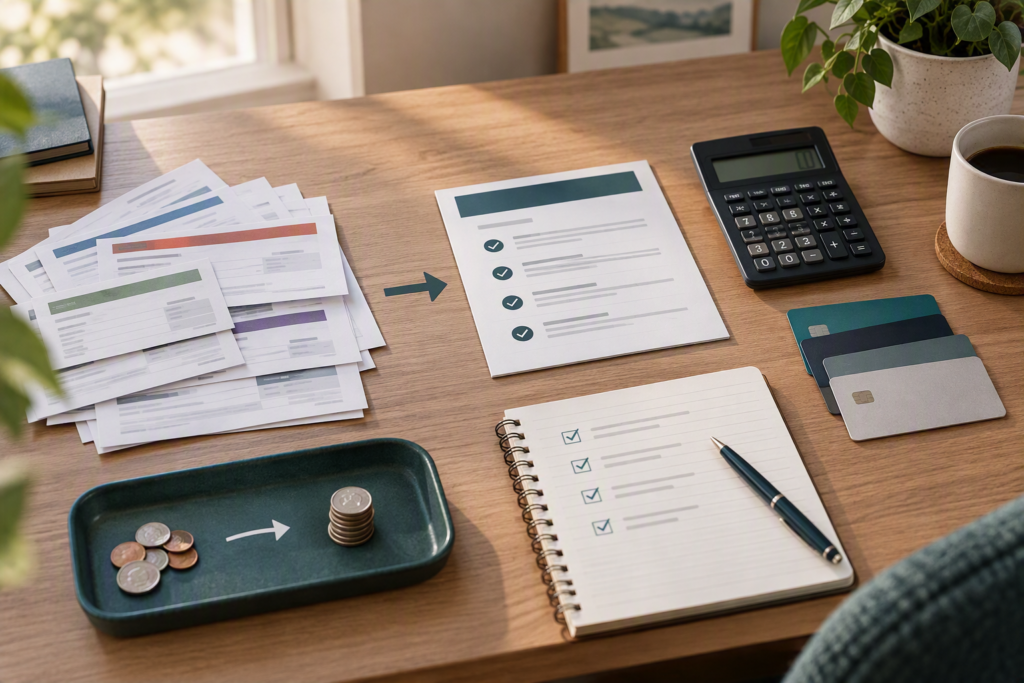
Look through bank statements, credit card statements, calendars, receipts, and previous bills. Focus on costs that appeared only occasionally but are likely to happen again.
Separate predictable expenses from true surprises
Ask whether you reasonably know the expense is coming. The exact amount may still vary, but if the event itself is expected, it may belong in your annual expense plan rather than being treated automatically as an emergency.
SIMPLE TEST
If you can name the expense, estimate when it may happen, and expect it to recur, it is usually worth planning for in advance.
Estimate the amount and expected timing
Use the most recent amount you paid as a starting point, then adjust if you have a reasonable reason to expect the cost to change. Record both the estimated amount and when you expect to need the money.
For variable expenses, a reasonable estimate or range may be more useful than pretending you know the exact amount.
Calculate how much still needs to be saved
Subtract any money you have already set aside from the estimated cost. The result is the amount that still needs to be funded.
Divide the remaining amount by the saving periods left
Once you know how much is still needed and how long you have, divide the remaining target by the number of months, paychecks, or other saving periods available.
Give each expense a place in your savings system
You can track annual expenses in one dedicated savings category, use separate sinking funds, or organize them inside a larger savings system. The structure matters less than being able to see what each dollar is meant to cover.
Review and update the plan as the year changes
Annual expenses are estimates, not fixed promises. Revisit the plan when a bill changes, a due date moves, or a new predictable cost appears. Adjusting early is usually easier than discovering the gap at the last minute.
Start with the expenses you already know about
You do not need to identify every future cost before you begin. Planning for a few large, recurring expenses can already reduce the number of financial surprises competing for your monthly cash flow.
REAL-LIFE EXAMPLE
What an Annual Expense Plan Can Look Like
The numbers do not need to be exact to be useful. A simple list of expected costs, timing, and regular contributions can make nonmonthly expenses easier to prepare for.
EXAMPLE HOUSEHOLD
Four predictable expenses spread across the year
Suppose a household expects an insurance premium, vehicle registration, holiday spending, and seasonal home costs over the next 12 months. Instead of waiting for each expense to arrive, they estimate the total and assign a monthly savings amount to each one.
The figures below are illustrative only. Actual expenses, timing, and priorities will vary.
| Expense | Estimated Cost | Time Available | Monthly Target |
|---|---|---|---|
| Insurance premium | $720 | 12 months | $60 |
| Vehicle registration and fees | $360 | 12 months | $30 |
| Holiday spending | $900 | 12 months | $75 |
| Seasonal home costs | $600 | 12 months | $50 |
| Combined plan | $2,580 | — | $215/month |
WITHOUT ADVANCE PLANNING
$2,580
The household may need to absorb several larger payments as they arrive throughout the year.
WITH A 12-MONTH PLAN
$215 per month
One possible approach is to build the expected costs gradually through smaller regular contributions.
WHAT IF YOU START LATE?
Use the time you actually have left
You do not need to wait until the beginning of a new year. If a $720 insurance bill is due in six months and nothing has been saved yet, the illustrative target becomes:
The purpose of the calculation is visibility, not perfection
Once you can see the total cost and the contribution required, you can decide what is realistic, adjust the timeline where possible, or prioritize the expenses that matter most.
DECISION SUPPORT
Is It a Planned Expense, a Variable Expense, or a Real Emergency?
The line is not always perfect, but one question helps: did you reasonably know the expense itself was likely to happen? If yes, it may belong in your annual expense plan even if the exact amount is uncertain.
Planned expense
You reasonably expect the expense and can estimate when it will occur.
- Annual insurance premium
- Vehicle registration
- Recurring membership renewal
- Planned holiday spending
- Known school or seasonal costs
Predictable, but uncertain
You expect the category to occur, but the final amount may vary from year to year.
- Routine vehicle maintenance
- Seasonal utility increases
- Home upkeep
- Back-to-school expenses
- Recurring travel or family costs
Financial emergency
The event itself was not reasonably expected, or the size of the financial shock is substantially beyond what you planned.
- Sudden major vehicle repair
- Unexpected essential home repair
- Unplanned urgent travel
- Income interruption
- Other unforeseen essential costs
VERESTLY EDUCATIONAL FRAMEWORK
Use the Known / Variable / Emergency Test
Ask these three questions when you are not sure where an expense belongs.
Did you reasonably know this expense would occur?
If yes, it is a strong candidate for advance planning.
Is only the amount uncertain?
If the category is predictable but the final cost varies, build a reasonable estimate rather than ignoring it.
Was the event itself substantially unexpected?
If yes, it may be more appropriate to think of it as an emergency rather than an annual expense.
The same category can be both predictable and unexpected
Routine car maintenance is foreseeable and can be planned for. A sudden major mechanical failure may not be. Planning for the predictable part does not eliminate the need for emergency savings; the two serve different purposes.
FREE PLANNING TOOL
Organize Your Year With the Annual Expense Planner
Once you identify the expenses that tend to appear outside your normal monthly routine, the next step is to put them in one place. The Verestly Annual Expense Planner helps you map expected costs, timing, and the amount you may need to set aside over time.
List predictable expenses
Capture annual, seasonal, and other nonmonthly costs before they disappear from your regular spending picture.
Add expected dates and amounts
Record when each expense may arrive and how much you currently expect it to cost.
Turn future costs into saving targets
See how larger future expenses can translate into smaller contributions based on the time available.
Free Verestly planning tool. Use your own estimates and adjust them as costs or due dates change.
ANNUAL EXPENSE PLAN
Example overview
Example figures are for illustration only and are not recommended savings amounts.
Prefer to save for each expense separately?
A sinking fund is one way to set aside money for a known future cost. The Annual Expense Planner helps you identify and organize those costs first; you can then decide how you want to separate the money in your own savings system.
YOUR ACTION PLAN
Build Your Annual Expense Plan in One Sitting
You do not need to map every possible expense before you start. A practical first version can focus on the larger predictable costs that are most likely to disrupt your cash flow if you wait until the bill arrives.
Find your biggest nonmonthly expenses
Review the past 12 months and write down the costs that appeared only occasionally but are likely to return.
Estimate the amount and due date
Use your most recent bill or a reasonable estimate, then record when you expect to need the money.
Calculate the contribution needed
Divide the amount still needed by the number of months, paychecks, or saving periods remaining.
Decide where each target fits
You may group several annual expenses together or separate them into sinking funds. Use whichever structure makes the purpose of the money easiest to track.
Review the plan before the bill is due
Update estimates when prices change, due dates move, or new information becomes available.
START SMALL
Your first plan can contain just three expenses
If a full-year review feels like too much, choose the three largest predictable expenses you expect over the next six to twelve months. Estimate them, calculate the contribution needed, and add more categories later.
The goal is a system you can maintain
A useful annual expense plan should make future costs more visible without becoming another complicated financial task. Start simple, update it periodically, and let the plan become more accurate as you learn your own spending patterns.
COMMON MISTAKES
Annual Expense Planning Mistakes to Avoid
Most planning problems come from missing expenses, using unrealistic assumptions, or treating every irregular cost the same way. A few adjustments can make the system much more useful.
Only planning for bills that happen exactly once a year
Predictable expenses can be annual, semiannual, quarterly, seasonal, or simply irregular. If a cost is likely to return and can be reasonably anticipated, it may belong in the plan.
Think in terms of predictable nonmonthly expenses, not only once-a-year bills.
Assuming last year's amount will stay exactly the same
Insurance premiums, fees, travel costs, maintenance, and seasonal expenses can change. Using an old amount without revisiting it can leave a gap.
Use the most recent amount as a starting estimate and revise it when new information becomes available.
Waiting for January to start
Annual planning does not have to begin at the start of the calendar year. Waiting may simply reduce the time available before the expense is due.
Start with the months or paychecks you actually have left.
Treating every unexpected amount as an emergency
A cost can be larger than expected without being completely unpredictable. If the category itself was foreseeable, part of the expense may still belong in your regular planning system.
Separate the predictable portion from the genuinely unexpected financial shock.
Funding every goal equally when money is tight
Dividing limited savings evenly across every future expense may leave an essential, near-term bill underfunded while less urgent categories receive the same attention.
Prioritize by timing, necessity, financial consequence, and how difficult the cost would be to absorb later.
Forgetting which dollars are already assigned
Money that appears available in savings may already be intended for insurance, registration, holidays, or another upcoming cost. Spending it elsewhere can recreate the original problem.
Keep a clear record of what each planned amount is meant to cover.
WATCH FOR DOUBLE COUNTING
Make sure the same expense is not funded twice
If a known annual expense is already included in another savings goal or sinking fund, adding it again to your annual expense plan can overstate how much you need to save.
A useful plan should become more accurate over time
Your first annual expense plan is a starting point. Each time an expense arrives, compare the estimate with the actual cost and use what you learned to improve the next cycle.
FREQUENTLY ASKED QUESTIONS
Questions About Planning for Annual Expenses
Annual expense planning works best when it stays flexible. These answers cover the most common questions that come up once you start turning irregular costs into planned savings.
What counts as an annual expense?
An annual expense does not have to happen exactly once every 12 months. It can include predictable costs that appear annually, semiannually, quarterly, seasonally, or at another recurring interval.
Examples may include insurance premiums, vehicle registration, school expenses, annual memberships, holiday spending, and other costs you reasonably expect to face again.
Are annual expenses the same as sinking funds?
Not exactly. An annual expense is the future cost itself. A sinking fund is one method you can use to set money aside gradually for that cost.
You can use one sinking fund for several planned expenses or separate funds for individual goals, depending on the system that is easiest for you to track.
Should annual expenses come out of my emergency fund?
Predictable annual expenses generally serve a different purpose from emergency savings. If you reasonably know a cost is coming, planning for it separately may help preserve emergency savings for genuinely unexpected financial shocks.
That said, real life is not always clear-cut. A routine maintenance category may be predictable, while a sudden major repair can still be an emergency.
What if I cannot save the full monthly target?
The calculated amount is a planning target, not a requirement. If it does not fit your current cash flow, prioritize the most essential or time-sensitive expenses first and adjust flexible goals where possible.
Saving part of the target can still reduce the amount you need to find later.
How often should I review my annual expense plan?
There is no universal schedule, but reviewing the plan whenever a major bill changes, a new recurring cost appears, or a due date moves can help keep your estimates useful.
A periodic check during the year may also help you catch expenses that were missed the first time.
CONTINUE LEARNING
What to Read Next
Annual expense planning connects naturally with savings goals, sinking funds, and emergency reserves. These guides cover each topic in more depth.
SOURCES & METHODOLOGY
How We Verified This Guide
Verestly reviewed primary U.S. consumer-finance guidance on less-frequent expenses, emergency savings, and savings planning. We used these sources to distinguish predictable nonmonthly costs from genuinely unplanned financial shocks and to support the planning principles in this guide.
LAST REVIEWED
September 2026
This guide was reviewed for accuracy, source quality, beginner clarity, savings-topic boundaries, and the distinction between predictable expenses and financial emergencies.

ABOUT THE AUTHOR
Edvaldo Ribeiro
Edvaldo Ribeiro creates beginner-focused personal-finance education for Verestly, with an emphasis on practical systems, clear explanations, and actionable financial tools.
View author profile →VERESTLY NEWSLETTER
Get Practical Money Guides and Tools
Join Verestly for beginner-friendly financial education, practical saving systems, new tools, and resources designed to help you make your next money decision more manageable.
Free resources · Beginner-friendly · Unsubscribe anytime
RELATED GUIDES
Continue Learning
Explore three related guides to continue building your savings system, plan for known future costs, and prepare separately for expenses you cannot predict.