TAXES · FOCUSED ANSWER
What Is Tax Withholding?
Tax withholding is money taken from your pay and sent toward your taxes during the year. Here is how federal income tax withholding works, what affects it, and why the amount withheld may differ from the tax you ultimately owe.
IN PLAIN ENGLISH
The Short Answer
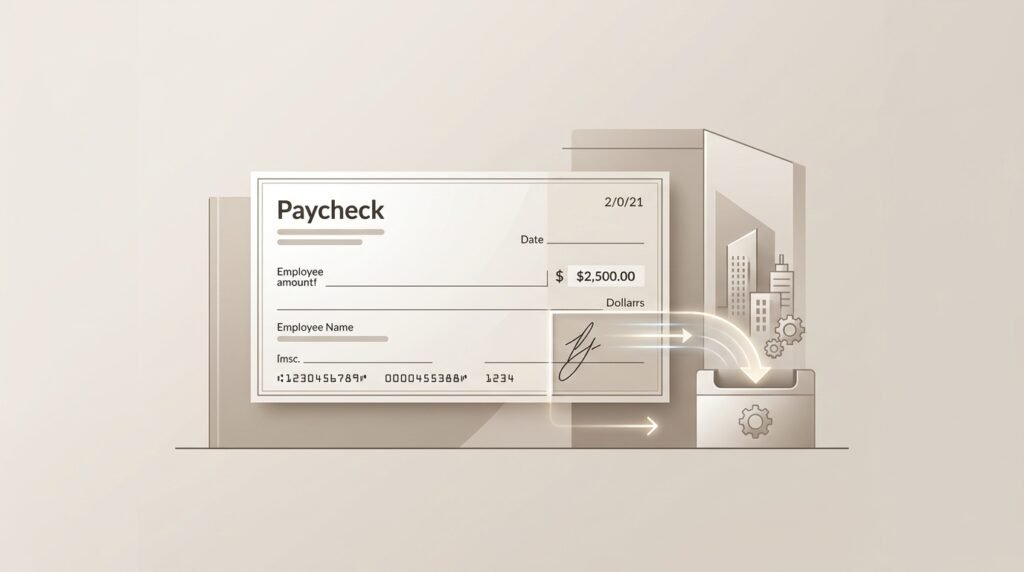
Tax withholding is money taken from certain income, such as employee wages, and paid toward your taxes during the year.
For employees, an employer generally withholds federal income tax from each paycheck and sends it to the IRS in the employee’s name. The amount withheld is a tax payment, not necessarily the amount of federal income tax you will ultimately owe for the year.
SIMPLE FLOW
Earn → Withhold → Send → Reconcile
HOW IT WORKS
How Tax Withholding Works
Federal income tax withholding is part of the pay-as-you-go tax system. For employees, the process starts with your wages, uses payroll information and your Form W-4, and ends with the amount withheld being credited toward your federal income taxes.
PAYROLL INPUTS
Your Employer Calculates Withholding From Each Paycheck
Your employer uses your wages, pay frequency, current IRS withholding rules, and information from your Form W-4 to determine how much federal income tax to withhold.
TAX PAYMENT
The Withheld Amount Is Paid Toward Your Federal Taxes
The federal income tax withheld from your pay is sent to the government in your name and counts as a tax payment when your federal income tax return is later reconciled.
IMPORTANT DETAIL
Withholding Is Not the Same as Your Final Tax Liability
Payroll withholding is based on the information available during the year. Your final federal income tax liability is determined later using your complete tax situation when you prepare your return.
That is why the amount withheld can end up being more or less than the tax you ultimately owe for the year.
KEY PRINCIPLE
Federal income tax withholding is a payment toward your annual tax bill, not a final calculation of how much tax you owe.
SIMPLE EXAMPLE
What Tax Withholding Can Look Like Across Two Paychecks
A simple paycheck example shows how federal income tax can be withheld as you earn wages and accumulate as tax payments throughout the year.
PAYCHECK 1
First Pay Period
PAYCHECK 2
Second Pay Period
TOTAL WITHHOLDING
Now Combine Both Paychecks
Across these two hypothetical paychecks, $400 of federal income tax has been withheld and paid toward the employee’s federal income taxes.
WHAT THIS SHOWS
The $400 withheld is a payment toward the employee’s federal income taxes. It does not mean the employee’s final tax liability for the year will be $400. The final amount depends on the employee’s complete tax situation when the tax return is prepared.
This is a simplified hypothetical example, not a withholding calculation. Actual federal income tax withholding depends on factors such as wages, pay frequency, Form W-4 information, and applicable IRS withholding rules.
WHAT THIS MEANS FOR YOU
When to Review Your Tax Withholding
You do not need to adjust your withholding constantly. The useful part is knowing when your income or tax situation has changed enough that the amount coming out of your paycheck may deserve another look.
CHECK YOUR PAYCHECK
Know How Much Federal Income Tax Is Being Withheld
Your pay stub generally shows the federal income tax withheld from that paycheck. Reviewing it periodically can help you understand how much you are paying toward your federal income taxes during the year.
WATCH FOR CHANGES
Review Withholding When Your Situation Changes
A new job, changes in household income, multiple jobs, or other personal and financial changes can affect whether your current withholding still reflects your expected tax situation.
REVIEW FORM W-4
Use a New W-4 if You Need to Change Withholding
Employees generally change federal income tax withholding by submitting a new Form W-4 to their employer. The form provides information used to calculate future withholding from pay.
View IRS Form W-4 information →CHECK THE YEAR-END RESULT
Use Your Tax Return as a Signal for the Next Year
An unexpected balance due or larger-than-expected refund can be a reason to review your withholding. It does not automatically mean the withholding was wrong, because your complete tax situation also affects the final result.
IRS TOOL
Want to Review Your Current Withholding?
The IRS Tax Withholding Estimator can compare expected federal income tax with current withholding and help eligible employees determine whether a withholding adjustment may be appropriate.
PRACTICAL RULE
Review withholding when your circumstances change or when your tax return produces an unexpected result—not simply because you want the largest possible refund.
COMMON MISUNDERSTANDINGS
What People Often Get Wrong About Tax Withholding
Tax withholding is straightforward in concept, but a few common assumptions can create confusion about refunds, tax bills, and what the amount on your paycheck actually means.
MISUNDERSTANDING
“The Amount Withheld Is the Tax I Owe”
Federal income tax withholding is a payment made during the year. It is not the final calculation of your federal income tax liability.
BETTER WAY TO THINK ABOUT IT
Think of withholding as money already paid toward your taxes. Your tax return later determines your actual liability and reconciles those payments.
MISUNDERSTANDING
“A Bigger Refund Always Means My Withholding Was Better”
A larger refund does not automatically mean your withholding was more accurate. A refund can result when your tax payments and refundable credits exceed the tax ultimately owed.
BETTER WAY TO THINK ABOUT IT
Treat the refund as the result of your full tax return, not as a score for how well your withholding worked.
MISUNDERSTANDING
“My Employer Chooses How Much Tax I Should Pay”
Your employer does not independently decide your final tax liability. Payroll withholding is calculated using IRS rules, your wages, pay frequency, and information provided on Form W-4.
BETTER WAY TO THINK ABOUT IT
Your employer applies the withholding system to payroll. Your final tax liability is determined separately when your complete tax situation is calculated.
MISUNDERSTANDING
“Changing My W-4 Changes Every Tax on My Paycheck”
Form W-4 is used for federal income tax withholding. Social Security and Medicare taxes are separate payroll taxes and generally follow different rules.
BETTER WAY TO THINK ABOUT IT
Separate federal income tax withholding from other deductions on your paycheck. They may appear together, but they are not the same tax.
REMEMBER
Federal income tax withholding is one way of paying taxes during the year. The final result depends on your complete tax return, including income, deductions, credits, and other payments that may apply.
FREQUENTLY ASKED QUESTIONS
Common Questions About Tax Withholding
These are some of the most common questions beginners have after learning how federal income tax withholding works.
Is tax withholding the same as the tax I owe? +
No. Federal income tax withholding is a payment made toward your taxes during the year. Your final federal income tax liability is determined when you prepare your tax return using your complete tax situation.
Why did my federal income tax withholding change? +
Withholding can change when your wages, pay frequency, Form W-4 information, or applicable withholding rules change. A bonus, a new W-4, or a change in your regular pay can also affect the amount withheld from a paycheck.
Does a large tax refund mean too much was withheld? +
Not necessarily. A refund generally results when your tax payments and refundable credits exceed the tax due on your return. Withholding may be one reason for the difference, but deductions, credits, other payments, and other tax circumstances can also affect the result.
How do I change the federal income tax withheld from my paycheck? +
Employees generally change federal income tax withholding by submitting a new Form W-4 to their employer. The IRS Tax Withholding Estimator can help eligible employees review their current withholding before making a change.
Use the IRS Tax Withholding Estimator →Is federal income tax withholding the same as Social Security and Medicare tax? +
No. Federal income tax withholding is separate from Social Security and Medicare taxes. They may all appear as deductions from the same paycheck, but they follow different tax rules.
WHAT TO READ NEXT
Put Withholding Into the Bigger Tax Picture
Tax withholding is easier to understand when you can connect the amount removed from each paycheck with the broader federal income tax system and the information shown on your pay stub.
Taxes for Beginners: How Federal Income Taxes Work
See how withholding fits into the broader federal income tax system, including taxable income, tax liability, payments, and filing.
How to Read Your Pay Stub
Learn where federal income tax withholding appears on a paycheck and how to distinguish it from other payroll deductions.
WANT TO REVIEW YOUR WITHHOLDING?
The IRS Tax Withholding Estimator can help eligible employees compare expected federal income tax with current withholding and evaluate whether an adjustment may be appropriate.
SOURCES & METHODOLOGY
How We Verified This Answer
Verestly prioritizes current IRS guidance and other primary government sources when verifying federal tax rules, forms, withholding methods, and tax-year-specific information. This article was reviewed using guidance applicable to 2026.
LAST REVIEWED
September 2026
This article was reviewed against current 2026 IRS guidance for accuracy, tax-year relevance, clarity, and source quality.

ABOUT THE AUTHOR
Edvaldo Ribeiro
Edvaldo Ribeiro creates beginner-focused personal-finance education for Verestly, with an emphasis on clear explanations, practical systems, and useful financial tools.
View author profile →VERESTLY NEWSLETTER
Get Clearer Answers to Everyday Money Questions
Get beginner-friendly financial education, practical tools, and simple explanations designed to help you make more informed money decisions.
Free resources · Beginner-friendly · Unsubscribe anytime
RELATED ANSWERS
Keep Exploring
Continue with three closely related tax guides selected to deepen your understanding.