CREDIT CARDS · BEGINNER GUIDE
How Credit Cards Work: A Beginner’s Guide
Learn how credit cards work, from credit limits and purchases to billing cycles, statements, payments, interest, fees, and responsible everyday use.
QUICK ANSWER
The Short Answer
A credit card is a revolving line of credit that lets you borrow money for purchases and repay the card issuer later. Each billing cycle, your transactions are added to the account, a statement is created, and a payment becomes due. How much you pay and when you pay it can affect whether a balance carries forward and whether interest or fees apply.
What You'll Learn
- ✓ How a credit card works from purchase to payment.
- ✓ How credit limits, balances, and available credit differ.
- ✓ How billing cycles, statements, and due dates fit together.
- ✓ When APR, interest, and common credit-card fees may matter.
- ✓ How to use a credit card responsibly without treating available credit as extra income.
UNDERSTAND THE BASICS
Start With the Credit Card Cycle
A credit card becomes much easier to understand when you follow the full cycle from purchase to payment. These four steps show what happens each time you use your card.
You make a purchase
When you use the card, the issuer authorizes the transaction and you begin using part of your available credit instead of paying directly from a checking account.
The transaction becomes part of your balance
After the transaction posts, it is added to your account. Your balance increases and your available credit generally decreases by a corresponding amount.
Your billing cycle closes
At the end of the billing cycle, the issuer creates a statement showing your activity, statement balance, minimum payment, due date, and other account details.
You make a payment
You decide how much to pay by the due date. That choice can affect whether part of the balance carries into another cycle and whether interest may apply under your card's terms.
The key idea is simple: a credit card does not make a purchase disappear. It changes when and how you pay for it.
SEE THE SYSTEM
What Happens When You Use a Credit Card?
A credit-card purchase is not completed in a single step. The transaction moves from authorization to your account balance, then through a billing cycle and eventually to a payment due date. Understanding that sequence makes the rest of credit-card mechanics much easier to follow.
Purchase
You use your card to pay for a purchase in person or online.
Authorization
The merchant requests approval and the issuer determines whether the transaction can proceed.
Transaction Posts
After processing, the transaction becomes part of your account balance and uses part of your available credit.
Statement
When the billing cycle closes, eligible account activity is summarized on your monthly statement.
Payment
You make the required payment by the due date, or pay more depending on how you choose to manage the balance.
Using the card means using borrowed money
When you pay with a credit card, money is not immediately withdrawn from your checking account the way it generally is with a debit-card purchase. Instead, the transaction uses part of the revolving credit line provided by the card issuer.
An approved transaction may first appear as pending. Once it posts, it generally becomes part of the account balance and reduces the amount of credit available for additional purchases.
Later, when the billing cycle closes, the issuer creates a statement showing the activity for that period. The statement then tells you how much is due and when the payment must be made.
CORE PRINCIPLE
A credit card changes the timing of payment—it does not remove the cost of the purchase. Every amount you borrow through the card eventually has to be repaid.
Not every transaction works exactly the same way
Credit-card accounts can treat purchases, balance transfers, and cash advances differently. They may have different fees, APRs, or interest rules depending on the card agreement.
For now, the important distinction is that a normal purchase is only one type of credit-card transaction. We will return to those differences later when we look at interest, grace periods, and fees.
BUILD THE FOUNDATION
The Credit Card Basics You Need to Understand
Once you understand how a transaction reaches your account, the next step is learning the numbers and rules that determine what you can spend, what you owe, when payment is due, and when borrowing can become more expensive.
STEP 1
Understand Your Credit Limit, Balance, and Available Credit
Your credit limit is the maximum amount of credit the issuer has made available on the account, subject to the terms of your card agreement. It is not money that has been deposited into your bank account.
Your balance is the amount currently owed on the credit-card account, while available credit is the portion of your credit line that is still available to use.
KEY IDEA
A credit limit represents borrowing capacity—not extra income. Using part of that limit creates a balance that eventually needs to be repaid.
STEP 2
Learn How the Billing Cycle and Statement Work
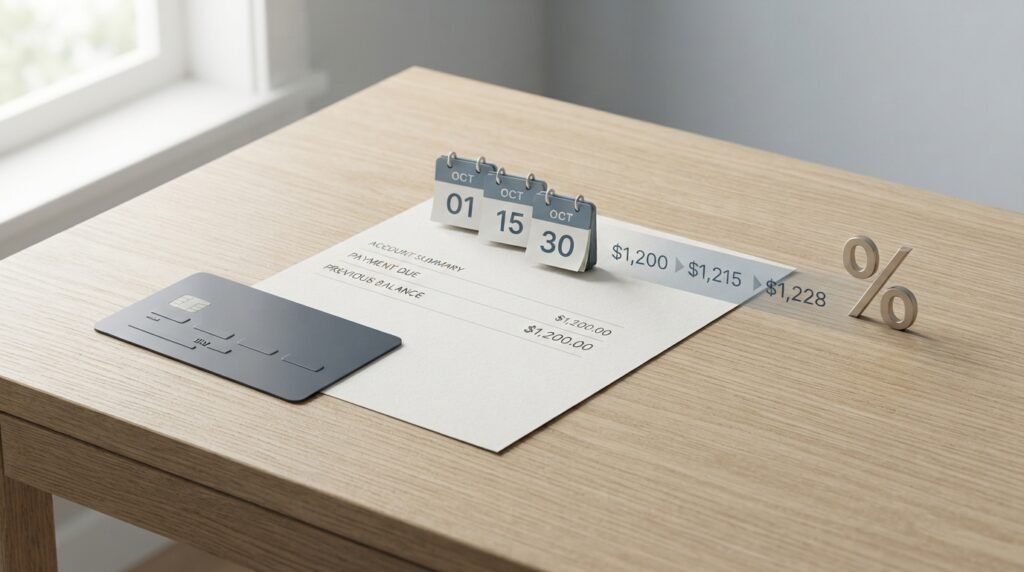
Credit-card activity is organized into billing cycles. During each cycle, the issuer records transactions such as purchases, payments, credits, fees, and interest when applicable.
When the billing cycle closes, the issuer creates a statement that summarizes the account for that period. This is one of the most important documents to review when managing a card.
- Your statement shows activity from the completed billing cycle.
- It identifies the statement balance and minimum payment.
- It shows the payment due date.
- It can list applicable APRs, fees, and interest charges.
- It helps you review transactions for errors or unfamiliar activity.
KEY IDEA
Your statement is the monthly snapshot that connects your spending activity to the payment that comes next.
STEP 3
Know the Difference Between Statement Balance, Current Balance, and Minimum Payment
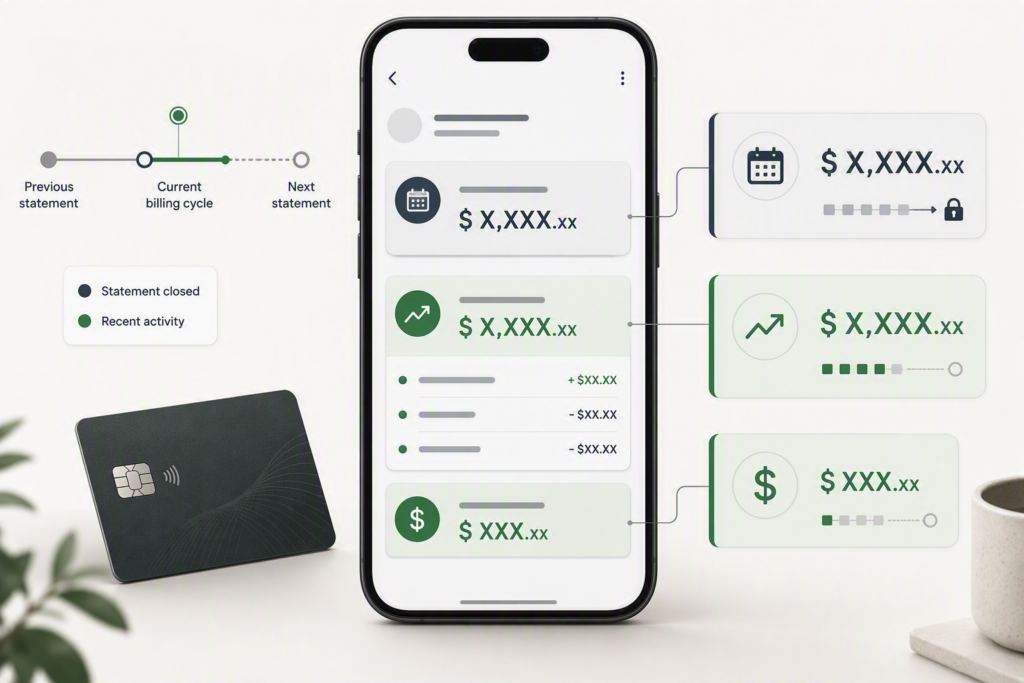
These three numbers can appear on the same account screen, but they answer different questions.
Your statement balance is the amount captured when the billing cycle closed. Your current balance reflects more recent account activity. Your minimum payment is the minimum amount required for that billing cycle under the card agreement.
- Statement balance: what was owed when the statement period closed.
- Current balance: a more up-to-date view that may include newer transactions or payments.
- Minimum payment: the minimum required amount that must generally be paid by the due date.
IMPORTANT
Paying only the minimum is not the same as paying the statement balance in full. A remaining balance may continue into another billing cycle and may accrue interest.
STEP 4
Understand APR, Interest, and the Grace Period
APR, or annual percentage rate, is the annualized rate used to express the cost of borrowing on a credit-card balance. A single card can have different APRs for different types of transactions.
Many credit cards also provide a grace period for purchases. When a grace period applies and its conditions are met, paying the applicable statement balance in full by the due date can allow you to avoid interest on those purchases.
KEY IDEA
You generally do not need to carry a balance or pay interest simply to use a credit card or establish credit history.
If part of a balance carries forward, or if the transaction does not qualify for a grace period, interest may apply according to the card agreement.
STEP 5
Know That Different Transactions Can Have Different Costs
A purchase is only one way a credit-card account can be used. Depending on the card, balance transfers and cash advances may also be available, but they can follow different pricing rules.
That matters because transaction types may have different APRs, fees, or grace-period treatment.
- Purchases: everyday transactions for goods or services.
- Balance transfers: balances moved from another account and often subject to separate terms or fees.
- Cash advances: transactions treated as cash borrowing, which commonly have separate fees and can begin accruing interest immediately.
CHECK THE TERMS
Do not assume every transaction on the same card has the same APR, fee structure, or interest treatment.
STEP 6
Understand How Credit Card Activity Can Affect Your Credit
A credit card is not the same thing as a credit score, but information about the account may appear on your credit reports and can influence credit-scoring decisions.
Factors that may matter include whether payments are made on time, how much revolving credit you are using, the age of your accounts, and applications for new credit.
- Payment history can affect credit outcomes.
- Credit utilization can influence some scoring models.
- Account age can be one factor in credit history.
- Applying for new credit may result in a hard inquiry.
KEEP IN MIND
Different credit-scoring models and lenders may weigh information differently. No single credit-card action guarantees a specific score increase.
VERESTLY FRAMEWORK
The Verestly Responsible Credit Card Framework
Responsible credit-card use starts with understanding what you are borrowing, reviewing what appears on your statement, and making payment decisions deliberately instead of treating available credit as extra income.
Spend With Intention
Use the card for purchases you understand and can fit into your broader financial plan. A credit limit is borrowing capacity, not additional income.
Watch Your Balance and Available Credit
Check how much of your credit line you are using and remember that posted purchases reduce available credit until the balance is repaid and the payment is credited.
Read Your Statement
Review transactions, the statement balance, minimum payment, due date, fees, and interest charges so you know exactly what happened during the billing cycle.
Make Payments on Time
Pay at least the required amount by the due date. When possible and appropriate for your situation, paying the applicable statement balance in full may help avoid purchase interest when a grace period applies.
Know When Borrowing Is Costing You
Pay attention to APRs, interest charges, cash advances, and fees. Different transaction types can follow different pricing rules.
THE CORE IDEA
This is a Verestly educational framework, not an official credit-scoring or lending rule. The goal is to make credit-card use easier to manage by connecting spending, account review, payment timing, and borrowing costs into one repeatable routine.
REAL-LIFE EXAMPLE
What a Credit Card Billing Cycle Can Look Like
Credit-card mechanics are easier to understand when you can see how a purchase moves through a real billing cycle. This example shows how a balance, statement, and payment can interact.
STARTING POINT
Meet Taylor
Taylor has a credit card with a $2,000 credit limit and starts the billing cycle with a $0 balance.
During the month, Taylor uses the card for several purchases. The goal is to follow what happens from those purchases to the statement and eventual payment.
| Credit limit | $2,000 |
|---|---|
| Starting balance | $0 |
| Groceries | $180 |
| Gas | $60 |
| Online purchase | $110 |
| Statement balance | $350 |
| Approximate available credit | $1,650 |
| Example minimum payment | $35 |
FOLLOWING THE CYCLE
What Happens Next
SPEND
Purchases Post to the Account
Taylor's $350 in purchases becomes part of the card balance after the transactions post. Available credit falls from $2,000 to approximately $1,650.
CLOSE
The Billing Cycle Ends
When the cycle closes, the issuer creates a statement showing a $350 statement balance along with the payment due date and required minimum payment.
REVIEW
Taylor Checks the Statement
Taylor reviews the listed transactions, statement balance, minimum payment, due date, and any fees or interest charges before deciding how much to pay.
PAY
Taylor Pays the Statement Balance
In this example, Taylor pays the full $350 statement balance by the due date. If the card provides a grace period for purchases and its conditions are met, Taylor may avoid interest on those purchases.
RESET
Available Credit Can Become Available Again
Once the payment is credited to the account, Taylor's balance is reduced and the corresponding portion of the credit line can generally become available again.
THE TAKEAWAY
The Statement Connects Spending to Payment
Taylor's example shows the complete basic cycle: purchases use available credit, posted transactions create a balance, the billing cycle turns that activity into a statement, and the payment decision determines what happens next.
This example is illustrative. The $35 minimum payment is hypothetical, and actual minimum payments, available credit, grace periods, interest, fees, posting times, and payment processing depend on the card issuer and account terms.
CHOOSE YOUR NEXT PRIORITY
What Should You Focus on Next?
Once you understand how a credit card works, the next step depends on what is causing the most confusion or risk in your account. Use the paths below to decide which credit topic deserves your attention first.
IF THIS SOUNDS LIKE YOU
You are still unsure what the numbers on your statement mean
If statement balance, current balance, minimum payment, and due date still feel interchangeable, focus first on understanding what each number represents before making payment decisions.
IF THIS SOUNDS LIKE YOU
You are worried about paying credit-card interest
If you are unsure when interest begins, what APR means, or why carrying a balance can increase borrowing costs, focus on the card's pricing terms and grace-period rules.
IF THIS SOUNDS LIKE YOU
You want to understand how the card can affect your credit
If your main concern is credit scores or credit reports, learn how payment history, balances, utilization, account age, and new applications can interact with your credit profile.
IF THIS SOUNDS LIKE YOU
You understand the mechanics but want a better routine
If the card itself makes sense but staying organized is the challenge, focus on a repeatable system for spending, reviewing statements, monitoring balances, and making payments on time.
ONE MORE THING TO CHECK
Is Your Credit Utilization the Part You Do Not Understand?
If you understand purchases and payments but are unsure how your balance relates to your credit limit, the next useful concept is credit utilization.
Beginner-friendly · Practical examples · No score promises
PRACTICAL VERESTLY RESOURCE
Turn the Credit Card Basics Into a Simple Routine
Understanding how a credit card works is useful, but the real benefit comes from applying the same checks every billing cycle. Use this simple routine to review your account before the payment due date.
- ✓ Review your statement balance, minimum payment, and due date.
- ✓ Check transactions, fees, and interest charges for anything unexpected.
- ✓ Confirm how much of your credit line you are currently using.
Beginner-friendly · Repeatable · No complicated setup
FIRST CHECK
What should you review before making your payment?
WANT TO UNDERSTAND YOUR CREDIT USE?
Learn how your revolving balance relates to your credit limit and why credit utilization can matter in some scoring models.
PUT IT INTO ACTION
Your 30-Day Credit Card Action Plan
You do not need to optimize every part of your credit-card use at once. Use the next 30 days to understand your account, review one full billing cycle, improve your payment routine, and build habits you can repeat each month.
TODAY
10–15 minLearn the Key Numbers on Your Account
Open your credit-card account or most recent statement and identify the numbers that determine what you owe and how much credit remains available.
- Find your credit limit.
- Check your current and statement balances.
- Identify your minimum payment and due date.
WEEK 1
Build awarenessWatch How Purchases Affect Your Balance
Pay attention to how new transactions move from pending to posted and how they affect both your balance and available credit.
- Notice when purchases first appear as pending.
- Check when those transactions become posted.
- Compare the balance with your available credit.
WEEK 2
Review the cycleRead Your Credit Card Statement
When your billing cycle closes, review the statement instead of looking only at the current balance in the card app.
- Confirm the statement balance and due date.
- Review purchases, credits, fees, and interest charges.
- Look for unfamiliar or incorrect transactions.
WEEK 3
Build a payment routineDecide How You Will Handle the Payment
Know how much is required, how much you intend to pay, and when the payment needs to reach the issuer. If a grace period applies, understand the conditions required to avoid interest on qualifying purchases.
- Confirm the minimum payment.
- Check the payment due date.
- Review your APR and grace-period terms if interest is a concern.
WEEK 4
Make it repeatableBuild Your Monthly Credit Card Routine
Turn what you learned into a simple process you can repeat every billing cycle instead of relying on memory or checking the account only when a payment is due.
- Review transactions during the month.
- Read each new statement when it arrives.
- Make the required payment on time.
- Check whether interest or unexpected fees appeared.
KEEP IT SIMPLE
The Goal Is to Understand the Cycle Before You Try to Optimize It
You do not need a complicated credit strategy. A consistent routine of monitoring purchases, reading statements, understanding borrowing costs, and paying on time can make credit-card use much easier to manage.
AVOID THESE PITFALLS
Common Credit Card Mistakes to Avoid
Most credit-card problems do not come from using the card once. They usually come from misunderstanding how balances, payments, interest, and available credit work over time.
Treating Your Credit Limit Like Extra Income
A higher credit limit can make spending feel more flexible, but every purchase still creates an amount that eventually has to be repaid.
Treat the card as a payment method, not as an extension of your monthly income.
Looking Only at the Minimum Payment
The minimum payment is the amount required for that billing cycle, but it does not tell you how much of the balance may continue into future cycles.
Review the minimum payment together with the statement balance, APR, and due date before deciding how much to pay.
Confusing Statement Balance With Current Balance
New transactions can make your current balance different from the statement balance that was created when the billing cycle closed.
Learn what each balance represents so you know which number belongs to the completed billing cycle and which includes newer activity.
Assuming Every Transaction Has the Same Cost
Purchases, balance transfers, and cash advances can have different APRs, fees, and interest rules depending on the card agreement.
Check the terms that apply to the specific type of transaction before using the card.
Carrying a Balance Because You Think It Builds Credit
Paying interest is not a requirement for establishing credit history, and carrying a balance does not guarantee a better credit score.
Focus on responsible account use and on-time payments instead of carrying debt solely for credit-building purposes.
Ignoring Your Statement Because Autopay Is Turned On
Automatic payments can help with consistency, but they do not replace reviewing transactions, fees, interest charges, and unexpected account activity.
Use autopay as a payment tool while still reviewing each statement when it becomes available.
FREQUENTLY ASKED QUESTIONS
Credit Card Questions Beginners Often Ask
These short answers clarify some of the most common points of confusion about balances, payments, interest, and credit.
Do I need to carry a balance to build credit?
Generally, no. Carrying a balance and paying interest are not required simply to establish credit history. Credit outcomes can vary by scoring model and lender, but paying interest is not itself a credit-building requirement.
Learn how to build credit from scratch →What happens if I pay my statement balance in full?
If the card provides a grace period for purchases and you meet its conditions, paying the applicable statement balance in full by the due date can generally allow you to avoid interest on those purchases.
Is paying the minimum payment enough?
Paying at least the required minimum by the due date can prevent that required payment from being late, but the remaining balance may continue into another billing cycle and may accrue interest.
Review minimum payments and statement balances →Why is my current balance different from my statement balance?
Your statement balance was captured when the previous billing cycle closed. Your current balance can include transactions, payments, or credits that occurred after that closing date.
Does using a credit card automatically improve my credit score?
No. Credit-card information can affect credit reports and scores, but the impact depends on the information reported and the scoring model or lender evaluating it. No particular pattern of card use guarantees a specific score increase.
Understand how credit scores work →What should I do if I see a charge I do not recognize?
Review the transaction details and contact the card issuer promptly if you believe the charge is unauthorized or incorrect. Billing errors and unauthorized transactions can involve specific consumer protections and time-sensitive procedures.
CONTINUE YOUR JOURNEY
Where to Go Next
Now that you understand how credit cards work, choose the topic that matches what you want to understand next. Each path goes deeper into one part of credit without repeating the entire card system.
UNDERSTAND CREDIT
Learn How Credit Information Works
Choose this path if you want to understand the information lenders may see and how credit-card activity can become part of your broader credit profile.
UNDERSTAND BALANCES
Learn How Credit Utilization Works
Use this path if you want to understand how your revolving balance relates to your credit limit and why that relationship can matter in some credit-scoring models.
UNDERSTAND COSTS
Go Deeper Into Interest and Payments
Choose this path if APR, interest, minimum payments, or statement balances are the parts of credit-card use you still want to understand more clearly.
BUILD BETTER HABITS
Strengthen Your Credit Card Routine
Choose this path if the mechanics already make sense and you want a more consistent process for reviewing statements, monitoring balances, and making payments on time.
NOT SURE WHAT TO READ NEXT?
Start With the Credit Card Concept That Still Feels Unclear
If the card cycle makes sense, you do not need to relearn the entire system. Go deeper into the one topic that matters most to your next decision—credit reports, scores, utilization, payments, or borrowing costs.
SOURCES & METHODOLOGY
How We Built This Guide
Verestly prioritizes primary government sources and financial regulators when explaining credit-card rules and consumer protections. For this guide, we reviewed official information on billing cycles, grace periods, APR and interest, payment timing, billing disputes, and unauthorized credit-card use.
LAST REVIEWED
September 2026
We reviewed this guide for accuracy, clarity, source quality, current credit-card rules, consumer protections, and consistency with Verestly's credit education standards.

ABOUT THE AUTHOR
Edvaldo Ribeiro
Edvaldo Ribeiro creates beginner-focused personal-finance education for Verestly, with an emphasis on clear explanations, practical systems, and actionable resources that help readers understand credit and make more informed money decisions.
View author profile →VERESTLY NEWSLETTER
Understand Your Money and Credit More Clearly
Get beginner-friendly guides and practical resources designed to make credit, saving, budgeting, debt, and everyday money decisions easier to understand.
- Practical financial education
- Beginner-friendly credit guides
- Useful tools and money systems
Free resources · Beginner-friendly · Unsubscribe anytime
KEEP LEARNING
Related Credit Guides
Continue with three carefully selected guides that go deeper into credit scores, credit reports, utilization, and responsible credit use.