
EMERGENCY SAVINGS · STARTER FUND
How to Build Your First $1,000 Emergency Fund
You don't need to save $1,000 all at once. Learn how to break your first emergency savings milestone into manageable steps, choose a contribution you can sustain, and build a financial cushion without overlooking essential expenses.
A $1,000 starter fund is one possible milestone, not a universal emergency savings requirement.
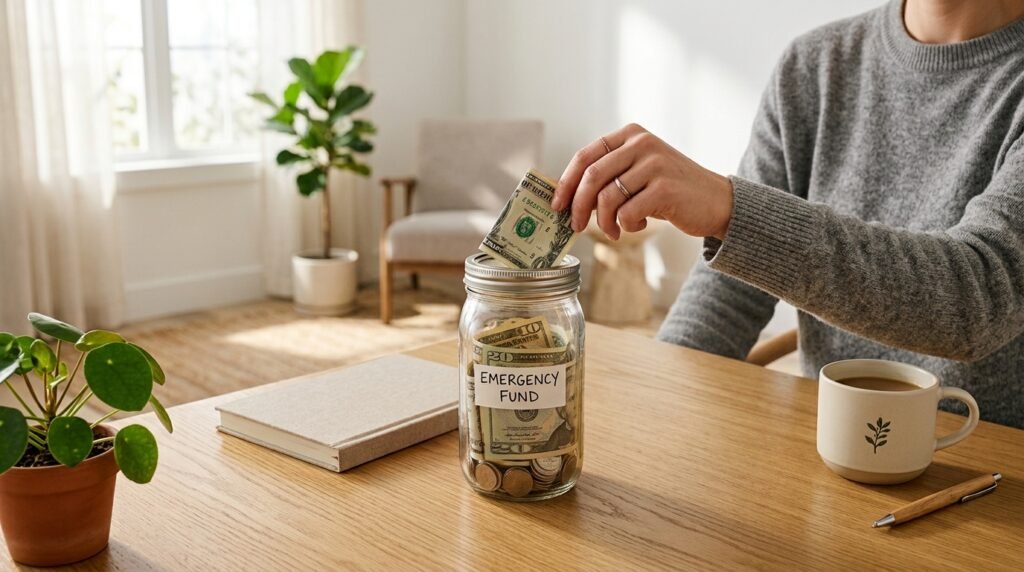
How Do You Save Your First $1,000?
Start with an amount you can afford to set aside consistently, keep it separate from everyday spending, and build your balance gradually. You don't need a perfect budget or a large paycheck to begin.
- Choose your starting amount. Begin with $5, $10, or another contribution that fits your essential expenses.
- Set a realistic schedule. Save weekly, every payday, or whenever your income allows.
- Keep the money accessible. Separate emergency savings from routine spending without making them difficult to reach.
- Use extra money selectively. Consider putting part of a bonus, refund, or other windfall toward your goal.
- Review and adjust. Track your progress and reduce contributions when essential expenses take priority.
Why $1,000 Is a Starting Point, Not a Finish Line
A $1,000 buffer may help cover some unexpected costs, but it won't protect every household from a major emergency. Your eventual savings target should reflect your expenses, income stability, and personal responsibilities.
Build Your First $1,000 One Step at a Time
The most useful savings plan is one you can maintain. Start with what your finances allow, make progress when possible, and adjust without treating temporary setbacks as failure.
Check What You Can Safely Save
Review your upcoming bills, essential spending, and minimum debt payments. Choose an amount that will not leave you short before your next paycheck.
Try this: Start with $5 or $10 if that is what your current cash flow allows.
Choose Your Contribution Schedule
Decide whether weekly, biweekly, or payday-based contributions fit your income. A flexible schedule may work better if your pay varies.
Example: Saving $25 every two weeks would add $650 over 26 contributions.
Give Your Emergency Money a Separate Place
Keep the funds distinct from everyday spending while ensuring you can access them when a genuine emergency occurs.
Remember: The purpose is reliable access, not maximizing investment returns.
Make Your First Transfer
Move your first affordable contribution into emergency savings. If your income is predictable, consider a recurring transfer that you can adjust or pause.
Small win: Your first $10 saved is already 1% of a $1,000 goal.
Track Your Progress and Reassess
Check your balance periodically. Increase contributions when you have extra room, or reduce them when bills and other essential needs require more of your income.
Keep going: If you need to use the fund for an emergency, rebuild it when you can.
Need a broader foundation before setting your target? Learn how to build an emergency fund from scratch →
How Long Does It Take to Save $1,000?
Your timeline depends on how much you can contribute and how often you save. Even modest deposits can add up over time. Compare these examples to find a pace that fits your finances.
Different Ways to Reach $1,000
| Contribution | Frequency | Deposits Needed | Time to Goal |
|---|---|---|---|
| $10 | Weekly | 100 | 100 weeks |
| $25 | Weekly | 40 | 40 weeks |
| $50 | Weekly | 20 | 20 weeks |
| $50 | Every two weeks | 20 | 40 weeks |
| $50 | Monthly | 20 | 20 months |
| $100 | Monthly | 10 | 10 months |
Examples assume a $0 starting balance, equal contributions, no withdrawals, and no interest. Timelines are measured from the start of the contribution plan. Actual progress may vary.
Make Your Goal Feel Smaller
Instead of focusing only on $1,000, recognize each milestone along the way.
10% of your goal
25% of your goal
50% of your goal
100% of your goal
Where Can You Find Money for Your First $1,000?
Building emergency savings does not have to mean cutting everything you enjoy. Look for small, realistic opportunities that fit your current circumstances.
Redirect One Flexible Expense
Look for a recurring purchase you would feel comfortable reducing temporarily, such as an unused subscription or occasional convenience spending.
Redirecting $15 per month would add $180 over 12 months.
Save Part of Unexpected Income
A work bonus, tax refund, cash gift, or reimbursement may provide an opportunity to make a larger deposit. First account for any immediate obligations tied to that money.
Setting aside $100 from an available windfall covers 10% of your goal.
Use Income You Can Earn Without Overextending
Selling an item you no longer need or accepting occasional paid work may help you contribute more. Consider any related costs, taxes, and the time required before deciding.
Three separate $40 net deposits would add $120 to your savings.
Capture Small Amounts When Available
If money remains after essential expenses and upcoming obligations, consider transferring a portion before it disappears into everyday spending.
An extra $5 transferred ten times would add $50 to your fund.
Need help identifying spending you can realistically adjust? Explore budgeting fundamentals →
How to Save $1,000 When You Have Very Little Left Over
If your income barely covers your expenses, saving may need to happen slowly or irregularly. The goal is to build resilience, not create another financial obligation.
When You Can Only Save a Few Dollars
Choose a smaller milestone, such as $50 or $100, before focusing on the full $1,000. Even occasional contributions can help establish a useful buffer.
When Your Income Changes Each Month
Avoid committing to a fixed deposit that assumes every paycheck will be the same. Consider contributing more during stronger months and less during slower periods.
When You Need to Pause Contributions
A temporary pause does not mean your savings plan has failed. Protecting essential expenses may be more important than maintaining a contribution schedule.
Turn Your First $1,000 Into a Savings Plan
Use the free Savings Goal Planner to calculate how much you may need to save, compare your timeline, and create a plan that fits your available cash flow.
- ✓ Set your $1,000 starter emergency fund goal.
- ✓ Include money you have already saved.
- ✓ Estimate weekly and monthly contributions.
- ✓ Adjust your timeline when circumstances change.
Free to use · No sign-up required · Educational estimates
Starter emergency fund goal
$1,000Illustrative example with no interest or withdrawals. Your actual plan may require a different contribution or timeline.
When Should You Use Your Emergency Fund?
Your emergency fund is meant to be used when necessary. Knowing what it should cover can help you protect your savings without hesitating during a genuine emergency.
Unexpected, Necessary Costs
Consider using your fund for urgent expenses that you could not reasonably plan for, including:
- Urgent vehicle repairs needed for work.
- Unexpected medical expenses.
- Essential home repairs.
- Basic living costs after income loss.
Costs You Can Anticipate
Predictable expenses are generally better handled through planned savings or sinking funds, such as:
- Annual insurance premiums.
- Scheduled vehicle maintenance.
- Holiday or birthday spending.
- Known annual fees or renewals.
How to Rebuild Your Savings
Using your emergency fund is not a setback if the money helped you handle a necessary expense. Rebuild gradually:
-
01Check your remaining balance.
Calculate how much you need to replace after the emergency.
-
02Reassess your available cash.
Make sure current bills and essential expenses are covered first.
-
03Restart manageable contributions.
Resume saving at a pace that fits your updated circumstances.
5 Mistakes That Can Slow Down Your First $1,000 Emergency Fund
A few common habits can make saving harder than necessary. Recognizing them early can help you protect your progress.
Setting a Deadline You Cannot Afford
An aggressive savings deadline can create pressure to skip necessary expenses or rely on credit.
Instead: Choose a flexible timeline based on money genuinely available to save.
Mixing Emergency Savings With Spending Money
Keeping everything together can make it difficult to identify how much remains available for emergencies.
Instead: Keep a clearly identified emergency balance that remains accessible.
Using the Fund for Predictable Expenses
Regular insurance renewals, planned maintenance, and annual bills can repeatedly drain emergency savings.
Instead: Build separate savings for known upcoming expenses when possible.
Taking Investment Risk With Emergency Money
Investments that fluctuate in value may leave you with less money when an urgent expense occurs.
Instead: Prioritize accessibility and preservation of funds over potential returns.
Treating $1,000 as Complete Protection
A starter fund can help with smaller emergencies, but major income disruptions or expenses may require more.
Instead: Reassess your savings needs after reaching your first milestone.
Questions About Building Your First $1,000
These answers can help you adapt your starter emergency fund to your circumstances.
Is $1,000 enough for an emergency fund?
It may cover some unexpected expenses, but it is not sufficient for every household. Your longer-term reserve depends on essential expenses, income stability, responsibilities, and risks. Learn how to estimate your emergency savings needs.
Where should I keep my first $1,000?
Prioritize safety, accessibility, and separation from everyday spending. A suitable insured savings account may be practical. Explore where to keep emergency savings.
Can I build an emergency fund with irregular income?
Yes. Contributions can change from month to month. Save more when money is available and protect essential obligations during slower periods. See flexible saving strategies.
Should I use emergency savings for annual bills?
Predictable annual costs are generally better handled through planned savings when possible. Keeping them separate helps preserve your emergency reserve. Learn to plan annual expenses.
What happens after I reach $1,000?
Review whether your savings provide enough protection for your household. You may decide to increase the reserve, rebuild other savings, or address competing financial priorities. There is no universal next target.
Choose Your Next Financial Step
Continue with the guide that best matches your current situation.
Build a Stronger Emergency Fund
Explore the complete process beyond your first savings milestone.
Read the Guide → SAVING FOUNDATIONSStrengthen Your Saving Habits
Learn how to make saving part of your everyday financial system.
Explore Saving Basics → FINANCIAL STABILITYMake Room Between Paychecks
Focus on essential bills and cash-flow stability when money is tight.
Explore the Guide →How We Verified This Guide
Verestly reviewed official U.S. consumer financial education resources covering emergency savings, starter goals, saving habits, and financial resilience. Contribution examples use simple arithmetic without assumed interest.
Supports emergency-fund definitions, flexible contributions, accessibility, saving habits, and fund usage.
Provides educational context for starter emergency savings, savings goals, and unexpected expenses.
Supports practical savings goals, automated deposits, and using available extra income to save.
Draft reviewed for source relevance, savings calculations, beginner clarity, and responsible financial guidance.
Edvaldo Ribeiro
Edvaldo Ribeiro creates beginner-focused personal finance education for Verestly, emphasizing practical money systems, realistic saving strategies, and clear financial guidance.
View author profile →Educational Information, Not Individual Advice
This guide provides general financial education, not personalized advice. Emergency savings needs depend on individual circumstances. The $1,000 target and contribution examples are illustrative, not guaranteed outcomes or universal requirements.
Read our Editorial Policy →THE VERESTLY NEWSLETTER
Build a Better Money System, One Step at a Time
Get practical guides, financial tools, and beginner-friendly
resources designed to help you make clearer money decisions.
✓ Practical financial education
✓ New calculators and tools
✓ Actionable money systems
No spam. Just practical money guidance. Unsubscribe anytime.



RELATED ANSWERS
Keep Exploring
Continue with three closely related guides selected to deepen your understanding.