BUDGETING · MONTHLY PLANNING
How to Plan a Monthly Budget Before the Month Begins
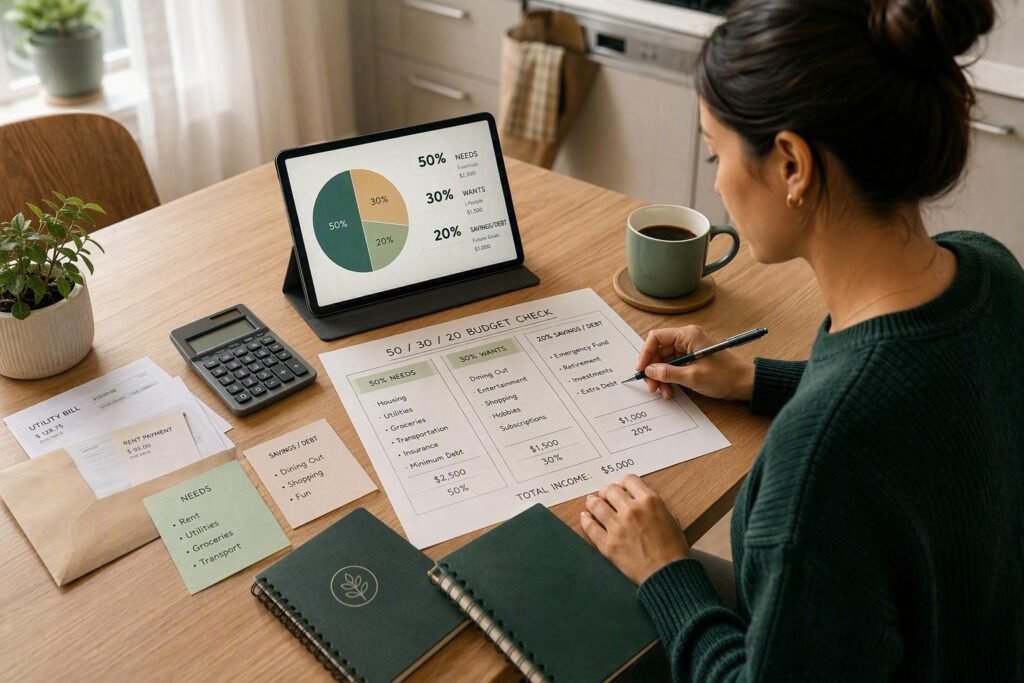
Build a realistic plan for the month ahead by reviewing recent spending, estimating available income, mapping bills and paydays, and preparing for expenses before they arrive.
QUICK ANSWER
The Short Answer
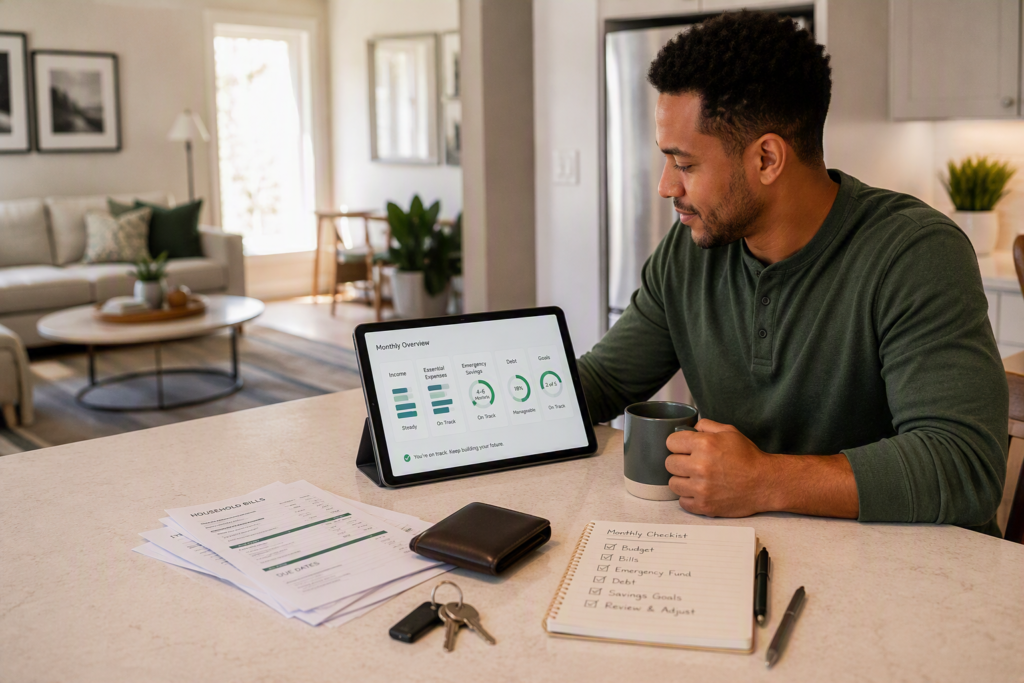
Planning your monthly budget before the month begins means deciding how expected income will cover bills, everyday spending, upcoming expenses, savings, and other priorities before that money starts being spent. A useful plan also checks when income arrives and when major expenses are due.
What You'll Do
- ✓ Review recent spending before estimating the new month.
- ✓ List expected income, bills, and their dates.
- ✓ Add month-specific costs and realistic flexible spending.
- ✓ Check the full plan and adjust any gaps before the month starts.
WHY THIS MATTERS
Why Planning Before the Month Starts Makes the Budget More Useful
A monthly budget works better when it reflects the month that is actually coming—not just a generic list of normal expenses.
Even when your income and recurring bills stay fairly consistent, each month can bring different costs. A birthday, medical visit, annual fee, school expense, seasonal utility bill, or extra travel can change what your money needs to cover.
Planning before the month begins gives you time to account for those differences before everyday spending starts competing for the same money.
It also helps you catch timing problems. Your total monthly income may be enough on paper, but several large bills can still fall due before the paycheck needed to cover them arrives.
PARENT GUIDE Budgeting for Beginners: A Complete Step-by-Step Guide →KEY IDEA
The goal is not to predict the month perfectly. It is to make the known decisions before spending begins and leave room to adjust when reality changes.
STEP-BY-STEP METHOD
How to Plan Next Month Before It Begins
Build the plan before everyday spending starts. Use recent spending as your starting point, account for what will be different next month, and check that the money will be available when you need it.
STEP 1
Review What Actually Happened Last Month
Start with recent spending instead of guessing what the next month should cost. Compare what you planned with what you actually spent in your major categories.
Pay attention to repeated differences. If groceries, transportation, utilities, or another category have exceeded your estimate for several months, use that information when building the next plan.
PRACTICAL TIP
Treat an unexpected one-time expense differently from a pattern. One unusual month does not always mean the category needs a permanent increase.
STEP 2
Estimate the Income Available for the Month
Write down the income you reasonably expect to receive during the upcoming month. Use take-home amounts that will actually be available for the spending plan.
If part of your income is uncertain, avoid building essential commitments around money that has not been confirmed yet.
IMPORTANT
If your income changes substantially from month to month, use a conservative working estimate and adjust the plan as income becomes clearer.
STEP 3
Put Income Dates and Major Bills on the Calendar
A monthly total can look balanced while the timing still creates problems. Record when income should arrive and when your major obligations are due.
- Rent or mortgage
- Utilities
- Insurance
- Minimum debt payments
- Childcare
- Transportation commitments
PRACTICAL TIP
Look for weeks when several bills are due before the next income payment arrives. That timing may affect how much you can safely spend earlier in the month.
STEP 4
Add the Expenses That Make This Month Different
Look beyond recurring bills. Check your calendar, upcoming appointments, renewals, family plans, and other commitments for costs that are specific to the month ahead.
- Birthdays and gifts
- Medical appointments
- School or childcare costs
- Annual or seasonal bills
- Vehicle or home maintenance
- Planned travel or family events
REMEMBER
An expense can be irregular without being unexpected. If you already know it is coming, include it in the plan before the month starts.
STEP 5
Set Realistic Amounts for Flexible Spending
Once recurring obligations and month-specific costs are visible, decide how much to allocate to categories that can change from month to month.
These figures are only an example. Your categories and amounts should reflect your household, priorities, and actual cost constraints.
STEP 6
Test the Plan and Adjust Before the Month Starts
Compare total planned spending with expected income, then check the calendar to make sure the money should be available when major expenses are due.
- Does planned spending stay within expected income?
- Are major bills covered before their due dates?
- Did you include known month-specific expenses?
- Are flexible category estimates realistic?
- Is any money being assigned twice?
THE GOAL
You do not need a perfect forecast. You need a plan that reflects what you know now and can be adjusted when the month changes.
STEP-BY-STEP METHOD
How to Plan Next Month Before It Begins
Build the plan before everyday spending starts. Use recent spending as your starting point, account for what will be different next month, and check that the money will be available when you need it.
STEP 1
Review What Actually Happened Last Month
Start with recent spending instead of guessing what the next month should cost. Compare what you planned with what you actually spent in your major categories.
Pay attention to repeated differences. If groceries, transportation, utilities, or another category have exceeded your estimate for several months, use that information when building the next plan.
PRACTICAL TIP
Treat an unexpected one-time expense differently from a pattern. One unusual month does not always mean the category needs a permanent increase.
STEP 2
Estimate the Income Available for the Month
Write down the income you reasonably expect to receive during the upcoming month. Use take-home amounts that will actually be available for the spending plan.
If part of your income is uncertain, avoid building essential commitments around money that has not been confirmed yet.
IMPORTANT
If your income changes substantially from month to month, use a conservative working estimate and adjust the plan as income becomes clearer.
STEP 3
Put Income Dates and Major Bills on the Calendar
A monthly total can look balanced while the timing still creates problems. Record when income should arrive and when your major obligations are due.
- Rent or mortgage
- Utilities
- Insurance
- Minimum debt payments
- Childcare
- Transportation commitments
PRACTICAL TIP
Look for weeks when several bills are due before the next income payment arrives. That timing may affect how much you can safely spend earlier in the month.
STEP 4
Add the Expenses That Make This Month Different
Look beyond recurring bills. Check your calendar, upcoming appointments, renewals, family plans, and other commitments for costs that are specific to the month ahead.
- Birthdays and gifts
- Medical appointments
- School or childcare costs
- Annual or seasonal bills
- Vehicle or home maintenance
- Planned travel or family events
REMEMBER
An expense can be irregular without being unexpected. If you already know it is coming, include it in the plan before the month starts.
STEP 5
Set Realistic Amounts for Flexible Spending
Once recurring obligations and month-specific costs are visible, decide how much to allocate to categories that can change from month to month.
These figures are only an example. Your categories and amounts should reflect your household, priorities, and actual cost constraints.
STEP 6
Test the Plan and Adjust Before the Month Starts
Compare total planned spending with expected income, then check the calendar to make sure the money should be available when major expenses are due.
- Does planned spending stay within expected income?
- Are major bills covered before their due dates?
- Did you include known month-specific expenses?
- Are flexible category estimates realistic?
- Is any money being assigned twice?
THE GOAL
You do not need a perfect forecast. You need a plan that reflects what you know now and can be adjusted when the month changes.
ADAPT THE METHOD
What Changes If Your Month Is Less Predictable?
The same pre-month planning process can work in different situations, but the assumptions you use may need to change based on income stability, bill timing, fixed costs, and how much financial margin you have.
IRREGULAR INCOME
If You Do Not Know Exactly How Much Income Will Arrive
Build the first version of the month around income you can reasonably expect rather than the best possible outcome. Cover essential obligations first, then update the plan as additional income becomes confirmed.
UNEVEN BILL TIMING
If Most of Your Bills Are Due Early in the Month
A balanced monthly total may still create pressure if several large obligations are due before later income arrives. Map the dates carefully and preserve enough cash for the period between each income payment.
HIGH FIXED COSTS
If Most of Your Income Is Already Committed
Housing, childcare, transportation, insurance, healthcare, and required payments can leave limited room to adjust. In that situation, concentrate on the categories that genuinely have flexibility instead of assuming every expense can be reduced.
MORE FINANCIAL MARGIN
If Your Planned Expenses Leave Money Unallocated
You do not have to force every remaining dollar into a category. You can keep some margin available for changes during the month, then direct additional money toward savings, debt goals, or other priorities according to your broader financial plan.
NOT SURE WHAT TO ADJUST FIRST?
Start with the constraint that puts the most pressure on the upcoming month—income uncertainty, bill timing, fixed costs, or limited margin. The budget should adapt to your circumstances, not force your circumstances into one fixed method.
VERESTLY PLANNING RESOURCE
Turn Next Month Into a Clear Spending Plan
A monthly budgeting worksheet can help you organize expected income, recurring bills, flexible spending, upcoming expenses, and financial priorities in one place before the month begins.
- ✓ Start with the income you reasonably expect to receive.
- ✓ Add recurring bills and costs that are specific to the upcoming month.
- ✓ See whether your planned allocations fit within the money available.
Beginner-friendly · Built for before-the-month planning
NEXT MONTH
Monthly Plan
Example preview · Not a recommended allocation
INCOME CHANGES MONTH TO MONTH?
Use the irregular-income budgeting workflow when the amount available for next month cannot be predicted reliably.
TAKE ACTION
Your Before-the-Month Budget Action Plan
You do not need to predict the next month perfectly. Start with what you already know, build the plan before spending begins, and leave room to adjust when actual income or expenses change.
BEFORE THE MONTH
Review and prepare
Gather the Numbers You Already Have
Use recent transactions, bill statements, your calendar, and expected income to build a realistic starting point for the month ahead.
- Review the previous month's actual spending.
- Confirm expected take-home income.
- List recurring bills and their due dates.
- Identify known upcoming or irregular expenses.
BUILD THE PLAN
Allocate intentionally
Decide How the Month Will Use Your Income
Assign realistic amounts to required bills, flexible spending, known month-specific costs, and current financial priorities.
- Cover required obligations first.
- Use realistic amounts for groceries, transportation, and other flexible categories.
- Add known annual, seasonal, or one-time costs.
- Keep some margin available if your cash flow allows.
FINAL CHECK
Test before spending
Make Sure the Plan Works in Total and by Date
Check both the monthly numbers and the timing of income and expenses. A balanced total is only useful if the money should also be available when bills and everyday costs need to be paid.
- Compare total planned allocations with expected income.
- Check whether major bills are covered before their due dates.
- Look for categories that rely on unrealistic estimates.
- Adjust obvious gaps before the month begins.
QUICK CHECK
A Useful Monthly Plan Should Answer Two Questions
Does the plan stay within the income you reasonably expect, and should that money be available when your major expenses are due?
COMMON MISTAKES
Mistakes That Can Undermine a Monthly Budget Before It Starts
Most planning problems come from unrealistic assumptions, missed expenses, or ignoring timing. Fixing those issues before the month begins makes the budget easier to follow and adjust.
MISTAKE
Copying Last Month Without Checking What Is Different
Recurring bills may stay similar, but birthdays, medical visits, seasonal costs, annual fees, travel, school expenses, or maintenance can make the upcoming month materially different.
BETTER APPROACH
Review the calendar and upcoming obligations before finalizing the new month's category amounts.
MISTAKE
Using Ideal Numbers Instead of Recent Spending
A budget can look balanced simply because groceries, transportation, household costs, or other flexible categories were estimated too low.
BETTER APPROACH
Start with recent actual spending, then adjust deliberately where a change is realistic for your household.
MISTAKE
Looking Only at the Monthly Total
Expected income may cover planned expenses for the month overall while several major bills still fall due before the income needed to cover them arrives.
BETTER APPROACH
Check income dates and bill due dates as well as the final monthly total.
MISTAKE
Treating Every Irregular Expense as Unexpected
Annual renewals, routine maintenance, seasonal costs, gifts, and similar expenses may not happen every month, but many can still be anticipated in advance.
BETTER APPROACH
Add known irregular costs to the month's plan before they compete with everyday spending.
MISTAKE
Assuming the Budget Must Be Perfect Before the Month Begins
A pre-month budget is still an estimate. Income can change, bills can vary, and unplanned expenses can appear after the month starts.
BETTER APPROACH
Build the best plan you can with the information available, then adjust it as reality changes instead of treating every revision as a failure.
REMEMBER
A useful monthly budget is not the one that predicts every expense perfectly. It is the one that makes known trade-offs visible before spending starts and gives you room to adjust.
FREQUENTLY ASKED QUESTIONS
Common Questions About Planning a Monthly Budget in Advance
These questions cover the situations that most often come up when you start building the next month's budget before the month actually begins.
How far in advance should I plan my monthly budget? +
Plan early enough to review recent spending, check upcoming bills and events, and make adjustments before the new month begins. For many people, that means setting aside time during the final days of the current month.
The exact timing matters less than completing the plan before routine spending starts using the next month's income.
Should I copy last month's budget into the new month? +
Last month's budget can be a useful starting point, but it should not automatically become the new month's plan. Review what you actually spent and identify what will be different before carrying amounts forward.
Bills, transportation, utilities, appointments, holidays, school costs, maintenance, and other expenses can change from one month to the next.
What if I do not know exactly how much income I will receive? +
Use an amount you can reasonably expect rather than building essential spending around the highest possible income. Cover required obligations first and adjust the plan as additional income becomes confirmed.
Read the irregular-income budgeting guide →Do I need to assign every dollar before the month begins? +
No. Assigning every dollar is part of some budgeting methods, but it is not required for a useful monthly plan. You may choose to leave some money unallocated as a margin for normal variation during the month.
The important part is knowing that the margin exists and not accidentally counting the same money for multiple purposes.
What should I do if my planned expenses are higher than my expected income? +
Separate expenses that are difficult to change from those with some flexibility. Then look for realistic timing changes, postponable purchases, duplicated allocations, or categories that can be adjusted without understating essential needs.
If essential and required costs consistently exceed available income, the budget is identifying a structural cash-flow gap. Budgeting can make that gap visible, but it cannot solve income insufficiency by itself.
How often should I change the budget after the month starts? +
Update the plan whenever a meaningful change affects the assumptions you made before the month began. That could include different income, a higher bill, an unexpected expense, or a category that is running above or below plan.
Adjustments are part of budgeting. The goal is to keep the plan useful as new information becomes available.
KEEP LEARNING
Continue With the Next Most Useful Guides
These guides deepen the specific skills that support better monthly planning without turning this article into a broader budgeting-method guide.
How to Budget With Irregular Income
Adapt your monthly planning process when the amount or timing of income changes from month to month.
Read the guide → FUTURE EXPENSESHow to Use Sinking Funds in Your Monthly Budget
Prepare gradually for predictable expenses that do not occur every month.
Read the guide → REVIEW AND IMPROVEHow to Review Your Budget at the End of the Month
Compare planned and actual spending so the next month's budget starts with better information.
Read the guide →WANT THE COMPLETE SYSTEM?
Return to the main budgeting guide for the broader beginner framework covering income, expenses, categories, planning, adjustment, and ongoing budget management.
SOURCES & METHODOLOGY
How We Verified This Guide
This guide was reviewed against primary consumer-finance guidance and current household-finance research. These sources support the article's guidance on realistic spending estimates, bill timing, cash-flow planning, and the financial pressures that can affect monthly budgeting.
LAST REVIEWED
September 2026
This guide was reviewed for factual accuracy, search-intent ownership, source quality, practical usefulness, and alignment with current Verestly budgeting standards.

ABOUT THE AUTHOR
Edvaldo Ribeiro
Edvaldo Ribeiro creates beginner-focused personal-finance education for Verestly, with an emphasis on practical systems, clear explanations, and actionable financial tools.
View author profile →VERESTLY NEWSLETTER
Get Practical Money Guides and Tools
Join Verestly for beginner-friendly financial education, new tools, practical systems, and resources you can actually use.
Free resources · Beginner-friendly · Unsubscribe anytime
RELATED GUIDES
Continue Learning
Explore three additional guides selected to deepen your monthly planning, budget review, and cash-flow skills.